A strong private label fitness accessories collection does not need dozens of products. In fact, a focused starter range is often easier to launch, test, and reorder. The key is to choose products that serve clear training needs while sharing a consistent brand identity.
This matters even more as fitness becomes more flexible. Consumers now train at home, in studios, outdoors, and while traveling. The ACSM 2026 fitness trends place mobile exercise apps and balance, flow, and core strength among the leading trends. In addition, ACSM’s updated resistance training guidance notes that elastic bands, bodyweight exercise, and home-based routines can support meaningful strength and functional gains.
For buyers, these developments create a practical opportunity. Compact accessories can support guided workouts without the cost, storage needs, or shipping weight of large equipment. However, the assortment still needs careful planning.
What Are Private Label Fitness Accessories?
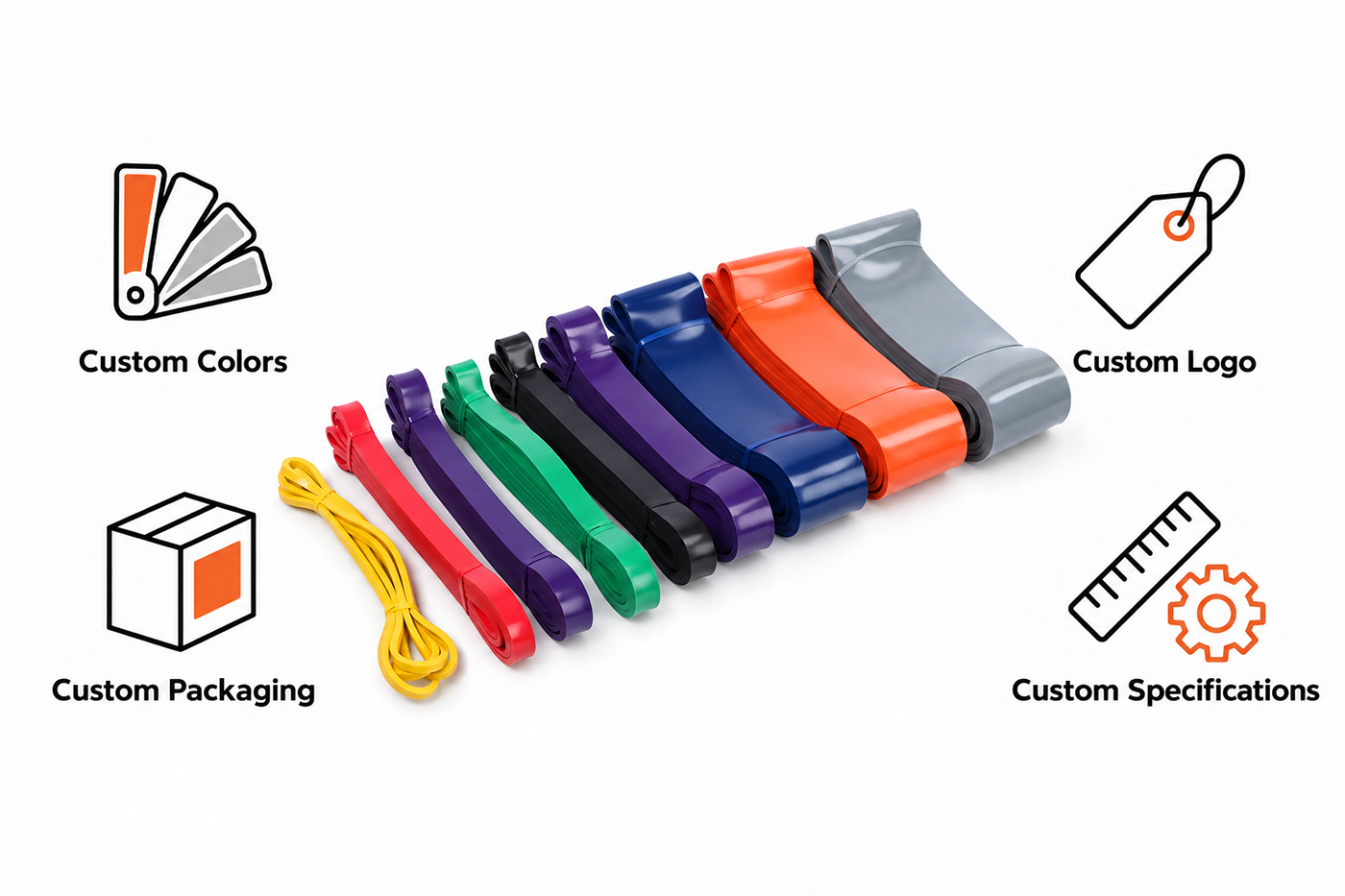
Private label fitness accessories are products manufactured by a supplier and sold under the buyer’s brand. Depending on the product and order quantity, customization may include color, logo, resistance level, size, packaging, instruction cards, and barcode labels.
Common categories include resistance bands, tube sets, yoga mats, massage tools, foam rollers, core sliders, jump ropes, straps, and small recovery items. You can review a broader selection on our fitness products page.
Private labeling is different from simply placing a logo on an existing item. A well-planned collection should also consider user needs, price positioning, packaging, product compatibility, and future reorders.
Start With a Clear Customer and Use Case
Before selecting products, define who will use them and where they will train. This decision helps control both the product mix and the final retail price.
Home fitness customers
Home users often want versatile equipment that is easy to store. Resistance bands, tube kits, sliders, jump ropes, and compact recovery tools work well in this segment. Clear exercise instructions can also increase the perceived value of the set.
Yoga and Pilates customers
This collection may include yoga mats, mini bands, Pilates rings, yoga blocks, stretching straps, and massage balls. Color coordination is especially important because buyers often treat these products as part of a lifestyle range.
Gym and performance customers
More demanding users may prefer power bands, lifting straps, wrist wraps, ankle straps, and deeper massage tools. In this case, material strength, stitching, hardware, and resistance accuracy deserve extra attention.
Travel and corporate wellness customers
Portable products should be compact, lightweight, and simple to repack. A drawstring pouch or zippered bag can unify several small items. It also creates a better surface for branding when the product itself is difficult to print.
Build the Collection Around Three Product Roles
A balanced starter collection usually combines a hero product, supporting products, and one or two add-on items.
1. Choose a recognizable hero product
The hero product should explain the collection at a glance. It may be a resistance band set, yoga mat, foam roller, or complete training kit. This item often receives the most prominent packaging and product photography.
2. Add complementary products
Supporting products should extend the same training purpose. For example, a resistance band set can pair with sliders and a jump rope. A yoga mat can pair with blocks and a stretching strap. A foam roller can pair with a massage ball and massage stick.
If recovery is central to your brand, our guide to EPP vs EVA foam rollers explains how material choice affects firmness, weight, appearance, and positioning.
3. Use add-ons to improve value
Small accessories can raise the perceived value of a kit without adding too much shipping volume. Examples include a door anchor, ankle cuffs, exercise cards, a carry pouch, or a QR card linking to digital routines.
Still, every item should have a purpose. Adding unrelated accessories may increase cost while making the brand message less clear.
Compare Materials Before Comparing Prices
Two products may look similar in a quotation but perform very differently. Therefore, buyers should compare material specifications before focusing on unit price.
For resistance products, confirm whether the material is natural latex, TPE, fabric, or another elastomer. Also check dimensions, thickness, resistance range, odor, stretch recovery, and surface finish. Our power bands wholesale guide covers several of these selection points in more detail.
For yoga mats, material affects grip, density, rebound, odor, abrasion resistance, and packaging. TPE, NBR, PVC, natural rubber, and cork each suit different price points and usage scenarios.
Recovery products require similar care. Foam density, inner-core construction, surface texture, and hardness all change the user experience. A supplier should provide clear specifications instead of relying only on product photos.
Plan MOQ by Customization Level
Minimum order quantity is rarely one fixed number. It changes according to the product and the requested customization.
- Stock color with a custom logo: Usually the most accessible option for a first order.
- Custom Pantone color: Often requires a higher quantity because the material or production batch must be prepared separately.
- Custom packaging: Printed boxes, sleeves, cards, and bags may each have their own MOQ.
- Custom specifications: New dimensions, resistance levels, molds, or structures may require tooling and larger volumes.
As a result, buyers should request separate MOQs for the product, logo, color, and packaging. This prevents surprises after the product selection is complete.
Design the Packaging Around the Sales Channel
Packaging should protect the product and fit the way it will be sold. An e-commerce brand may prioritize compact dimensions and shipping durability. A retail buyer may need hanging holes, barcode areas, multilingual warnings, and stronger shelf presentation.
For kits, first confirm how every component fits inside the pouch or box. Then check the packed weight and master-carton dimensions. A visually attractive package can become expensive if it wastes carton space.
Instruction content is another useful branding tool. A simple exercise card or QR code can help customers understand the product. However, exercise claims should remain accurate and appropriate for the target market.
Sample and Test Before Confirming Production
A pre-production sample helps verify more than appearance. Buyers should test function, dimensions, color, logo position, packaging fit, and overall presentation.
For resistance products, stretch the band repeatedly and inspect the surface afterward. Check handles, stitching, carabiners, anchors, and connection points. For foam and yoga products, inspect density, odor, rebound, surface marks, and packaging pressure.
Finally, compare the approved sample with the production specification sheet. Written tolerances are more reliable than general descriptions such as “high quality” or “heavy duty.”
Private Label Fitness Accessories Buyer Checklist
- Define the target customer, training setting, and retail price range.
- Select one hero product and a small number of complementary items.
- Confirm exact materials, dimensions, weights, and resistance levels.
- Request separate MOQs for stock colors, custom colors, logos, and packaging.
- Clarify logo method and printable area for every product.
- Check packaging style, barcode space, warnings, and instruction requirements.
- Ask for unit packing, carton quantity, carton size, gross weight, and CBM.
- Confirm sample cost, production lead time, and approval process.
- Discuss testing documents and destination-market requirements early.
- Plan reorders around realistic sales forecasts rather than too many first-order SKUs.
How to Reduce Risk on the First Order
Start with fewer SKUs and proven structures. If possible, use stock colors with a custom logo for the initial market test. This approach can reduce MOQ pressure and shorten development time.
Next, collect feedback on color, packaging, product combinations, and price. Custom colors or more specialized products can then be introduced in the second order. This staged process gives a new brand room to improve without committing too much inventory too early.
Build a Collection That Can Grow
The best starter collection is not simply the largest one. Instead, it gives customers a clear reason to buy and gives the brand a logical path for expansion.
Dynamic Fitness Life supports OEM and ODM development across resistance training, yoga, Pilates, massage, and recovery accessories. If you are planning a private label range, contact us with your target market, preferred products, estimated quantities, and branding requirements. We can help compare suitable structures, customization options, packaging, and order planning.