EPP vs EVA Foam Roller: Which Material Is Better for Your Fitness Brand?
Foam rollers are common products in recovery, mobility, home fitness, and gym training.
However, not every foam roller is built the same way.
For B2B buyers, one of the first decisions is often the material. EPP and EVA are two common options, but they can create very different products.
An EPP roller may suit one product position. Meanwhile, an EVA design may work better for another.
Therefore, buyers should not choose a material based on price alone.
This guide compares EPP vs EVA foam rollers from a B2B sourcing perspective. It covers product positioning, firmness, construction, branding, packaging, and supplier communication.
Why Does Foam Roller Material Matter?
Material affects more than appearance.
It can influence the feel of the roller, its construction, surface design, weight, and product positioning.
For this reason, two rollers with similar dimensions may still feel very different during use.
Material also affects product development.
A fitness brand may want a simple recovery roller. In contrast, another brand may prefer a more detailed surface or a different visual style.
Therefore, define the product concept before requesting quotations.
What Is an EPP Foam Roller?
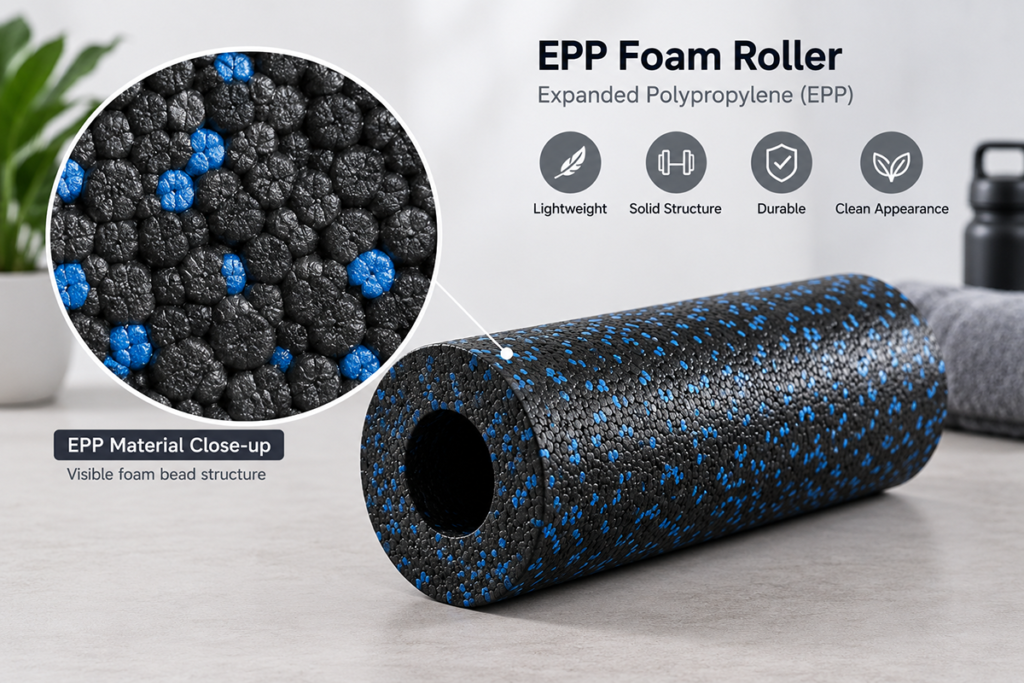
EPP stands for expanded polypropylene.
It is a lightweight foam material that can be formed into a solid roller structure.
For B2B buyers, EPP foam rollers are often worth considering when the product concept calls for a simple and lightweight recovery tool.
Their construction can also create a clean, minimal appearance.
This makes EPP suitable for several types of product ranges, including:
- Recovery and mobility collections
- Gym accessories
- Home fitness products
- Sports training accessories
- Fitness kits
Dynamic Fitness currently lists EPP Foam Roller as a dedicated product category within its wider foam roller and recovery range.
However, material alone does not define the final product.
Size, density, surface design, color, and branding should also be confirmed with the supplier.
What Is an EVA Foam Roller?
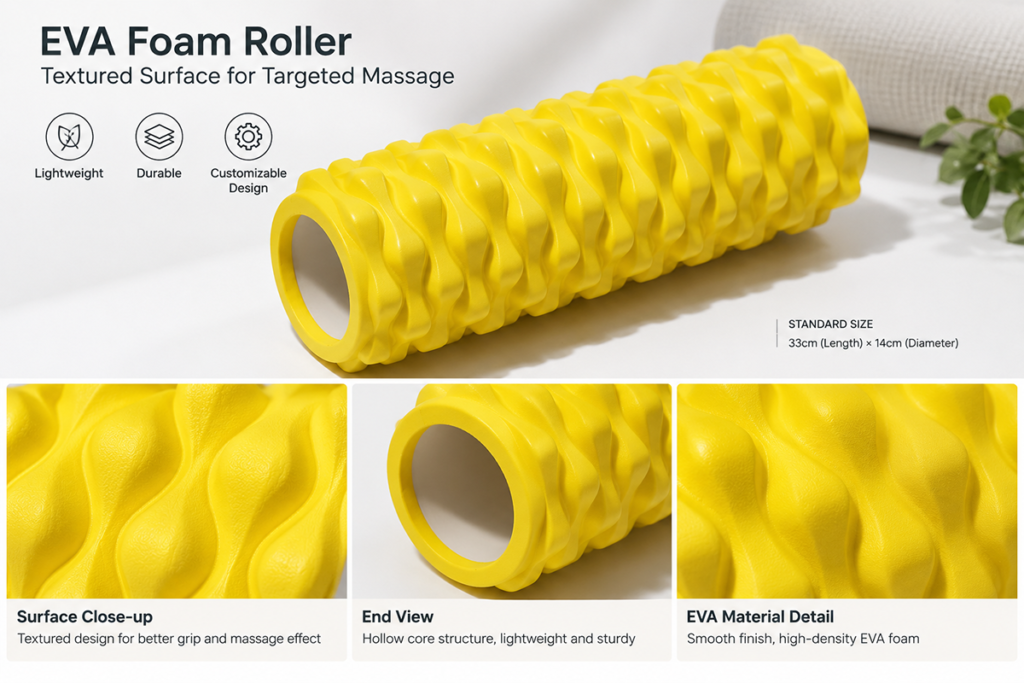
EVA stands for ethylene-vinyl acetate.
It is another foam material widely used across fitness accessories.
An EVA foam roller can use different constructions depending on the product design.
For example, some products may combine an EVA outer surface with an internal core. Others may use a different structure.
As a result, buyers should not assume that every EVA roller has the same feel or construction.
Dynamic Fitness currently separates EVA Foam Roller and EPP Foam Roller within its product catalog. This makes material an important part of its Recovery & Mobility product structure.
When requesting a quote, always confirm the complete construction rather than asking only for “an EVA foam roller.”
EPP vs EVA Foam Roller: What Should B2B Buyers Compare?
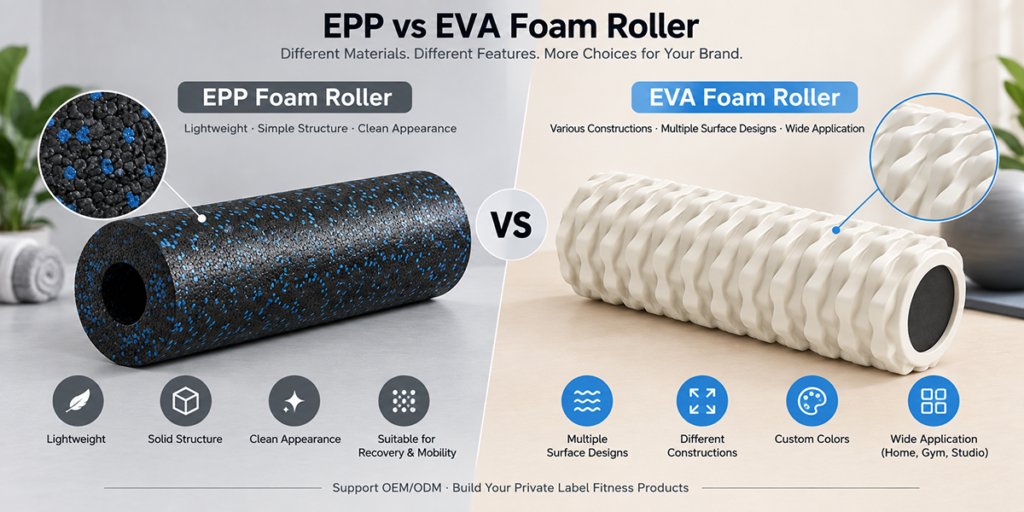
1. Product Positioning
Start with the customer.
Who will use the roller?
A simple recovery product may need a different design from a premium mobility accessory.
For example, a fitness brand may want a clean roller that fits a broader workout collection.
Meanwhile, a recovery-focused brand may want more surface detail and a stronger visual identity.
Therefore, the material should support the intended product position.
Do not choose EPP or EVA simply because one option appears more common.
2. Firmness and User Experience
Firmness is an important part of the foam roller experience.
However, buyers should avoid assuming that material name alone tells the complete story.
Density, dimensions, construction, and surface shape can all affect how the roller feels.
Therefore, ask the supplier for the available product specifications.
Samples are also useful when feel is important to the final product.
A photo can show the surface.
It cannot fully show how the roller feels during use.
3. Surface Design
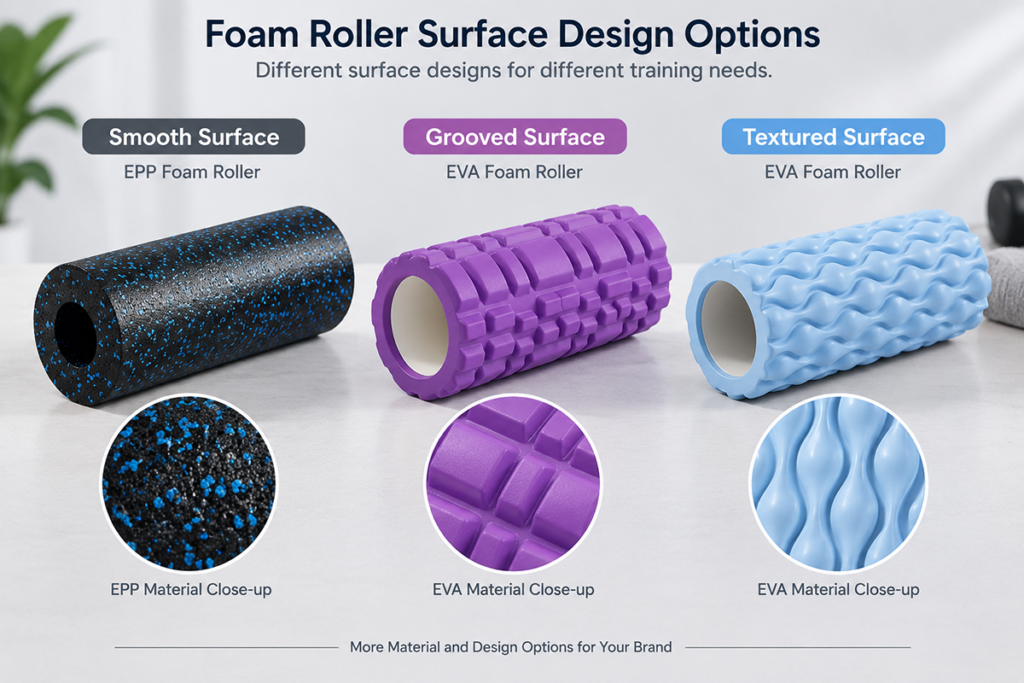
Foam rollers can have very different surfaces.
Some designs are smooth.
Others use grooves, raised sections, or textured patterns.
The right choice depends on your target customer and product concept.
A simple surface may suit a clean, minimal product range.
In contrast, a more textured design can create a stronger visual difference.
However, avoid selecting a complicated surface only because it looks more technical.
The design should make sense for the product you want to sell.
4. Product Construction
Construction should be confirmed before comparing prices.
This is especially important with EVA rollers.
Two products may use EVA on the outside but have different internal structures.
As a result, they may differ in weight, firmness, appearance, and cost.
EPP rollers can also vary in density, dimensions, and surface design.
Therefore, your RFQ should include more than the material name.
Ask for:
- Material
- Product dimensions
- Construction
- Surface design
- Color
- Logo options
- Packaging
- Estimated quantity
This creates a better basis for quotation comparison.
Which Material Is Better for a Private-Label Brand?
There is no universal answer.
Instead, the right choice depends on your brand positioning.
Choose EPP When the Product Concept Is Simple
An EPP roller can fit a straightforward recovery range.
Its lightweight foam construction may also suit brands that prefer a simple product format.
For example, an EPP roller could sit alongside massage balls and other compact recovery tools.
The result can be a focused mobility collection.
Consider EVA When Design Variety Matters
EVA can support different foam roller constructions and surface styles.
Therefore, it may be useful when the visual design plays a larger role in your product concept.
However, compare the complete construction.
Do not compare an EPP roller and an EVA roller only by their outside dimensions.
They may be very different products.
How Should Amazon Sellers Choose a Foam Roller?
Amazon sellers should think about the complete retail offer.
First, identify the target customer.
Is the roller aimed at general home fitness?
Recovery?
Mobility?
Gym training?
Next, decide how the product will look different from competing products.
Color, surface design, branding, dimensions, and packaging can all contribute.
Then, consider shipping.
Foam rollers take up physical space even when they are relatively lightweight.
Therefore, carton dimensions and packing quantity can matter when calculating landed cost.
Finally, avoid adding unnecessary accessories just to increase the product count.
A clear product concept is often easier for customers to understand.
What Should Wholesalers and Distributors Consider?
Wholesalers often need products that can serve several customers.
For this reason, the initial range should remain manageable.
You might start with a small number of roller styles.
For example, one simple roller and one more differentiated design can cover different product positions.
Then, expand based on sales feedback.
This approach can reduce unnecessary SKUs.
It also gives distributors real market information before expanding the recovery category.
How Can Foam Rollers Be Customized?
Customization can help a standard roller fit a private-label collection.
However, the available method depends on the exact product.
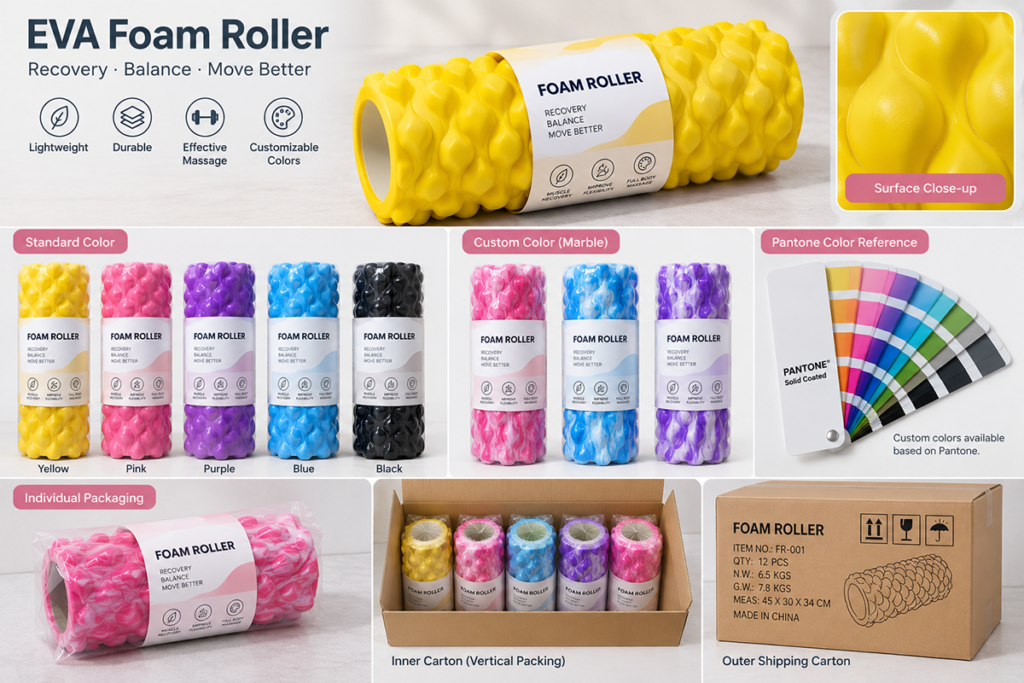
Custom Color
Color is one of the easiest ways to connect a roller with the rest of a fitness collection.
A recovery brand may use one consistent color direction across foam rollers, massage balls, resistance products, and packaging.
If you need a specific brand color, send the supplier your color reference.
Then, confirm what is possible for the selected material and order quantity.
Custom Logo
Logo placement depends on the surface and product construction.
Therefore, send your actual logo artwork before confirming the branding method.
The supplier can then check the available area and suitable application.
A sample is useful for reviewing the final appearance.
Custom Packaging
Packaging should follow the sales channel.
Wholesalers may need a simple solution.
Retail brands may prefer branded packaging.
Meanwhile, Amazon sellers may need barcode labels or other e-commerce packaging elements.
Dynamic Fitness states that its wider OEM/ODM service supports custom logos, colors, sizes, packaging, and product sets.
Still, confirm the available options for the exact foam roller before placing an order.
Should You Sell Foam Rollers Individually or in a Recovery Collection?
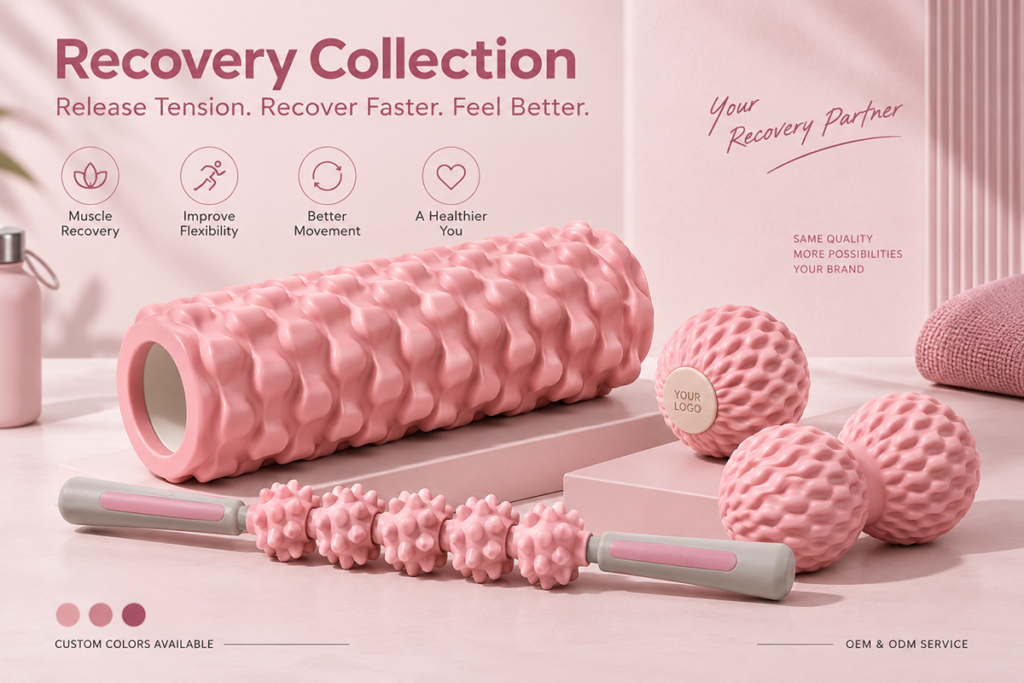
A foam roller can work as a standalone product.
However, it can also become the core item in a recovery collection.
Dynamic Fitness currently lists Foam Rollers, Massage Balls, Peanut Massage Balls, Massage Sticks, and other Recovery & Mobility categories in its product catalog.
This creates several possible product directions.
For example, a recovery collection could combine:
- Foam roller
- Massage ball
- Peanut massage ball
- Massage stick
- Carry or storage solution
However, do not build a kit only to increase the number of products.
Each item should serve a clear purpose.
A smaller, focused recovery collection can be easier to position than a large set of unrelated accessories.
How Should You Compare Foam Roller Quotations?
Do not start with unit price.
First, make sure the products are comparable.
Check the material.
Then, confirm the dimensions and construction.
Next, compare surface design, branding, and packaging.
Finally, review the estimated order quantity and carton information.
A quotation for a simple EPP roller should not be compared directly with a more complex EVA design unless the specifications are aligned.
Otherwise, the price difference tells you very little.
Why Does Packaging Size Matter?
Foam rollers are different from compact products such as mini resistance bands.
They occupy more carton space.
Therefore, freight can become an important part of the sourcing decision.
Before confirming a bulk order, ask for available carton information.
Useful details may include:
- Quantity per carton
- Carton dimensions
- Gross weight
- Net weight
- CBM
This information can help buyers estimate shipping costs.
It is also useful when combining foam rollers with other fitness products in one shipment.
What Information Should You Send to a Foam Roller Supplier?
A clear inquiry can save several rounds of communication.
Include:
- Preferred material
- Reference photo or product style
- Dimensions
- Surface design
- Estimated quantity
- Color requirements
- Logo artwork
- Packaging requirements
- Target market
- Sales channel
If you are unsure whether EPP or EVA is better, explain your target product position.
For example, tell the supplier whether you need a simple wholesale product or a more differentiated retail design.
That information can help them recommend suitable options.
Should You Request a Sample?
Yes, especially when material feel and surface design matter.
A sample allows you to review the actual product before mass production.
Check:
- Material
- Firmness
- Dimensions
- Surface
- Color
- Logo
- Packaging
- Overall appearance
If you are comparing EPP and EVA, reviewing both samples can be more useful than comparing photos.
After testing them, choose the construction that fits your target customer.
Common Foam Roller Sourcing Mistakes
One common mistake is asking only for the lowest price.
Another is comparing rollers with different constructions.
Some buyers also select the surface design before defining the target customer.
Meanwhile, packaging and shipping volume may be considered too late.
A clearer process is:
Customer → Material → Construction → Size → Surface → Branding → Packaging → Sample
First, define who will buy the product.
Next, choose the material and construction.
Then, move into appearance and customization.
Finally, confirm the sample before bulk production.
This keeps the sourcing process more focused.
Final Thoughts
The EPP vs EVA foam roller decision should start with your product concept.
EPP can suit a simple and lightweight recovery product.
EVA, meanwhile, can be used in different constructions and surface designs.
However, material alone is not enough.
Buyers should also compare dimensions, firmness, construction, surface design, branding, packaging, and shipping requirements.
Most importantly, make sure suppliers quote the same specification.
That makes price comparisons more useful and helps you select a foam roller that fits your market.
Developing a Private-Label Recovery & Mobility Range?
Dynamic Fitness currently includes Foam Rollers, Massage Balls and related Recovery & Mobility products within its wider fitness product sourcing range. The company also supports OEM/ODM sourcing for global fitness brands, wholesalers, distributors, retailers and e-commerce sellers.
If you are developing a recovery product line, send your target products, estimated quantities, preferred materials, reference photos, logo, colors, and packaging requirements.
We can then review suitable sourcing options for your project.
Pingback: Private Label Fitness Accessories: 2027 Guide