Fabric resistance bands have become a practical product category for fitness brands, gyms, rehabilitation suppliers, and private label businesses. Compared with thin latex mini bands, textile bands offer a different feel, appearance, and positioning. However, buyers still need to compare fabric construction, resistance, sizing, inner grip, logo methods, colors, and packaging before placing a bulk order.
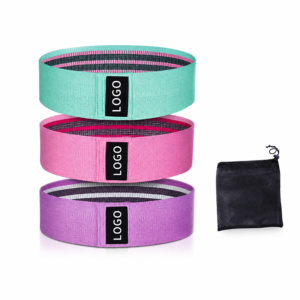
This B2B guide explains what to check when sourcing fabric resistance bands wholesale and how to prepare a clearer OEM or private label specification.
What Are Fabric Resistance Bands?
Fabric resistance bands are closed-loop exercise bands made from woven textile structures with elastic yarns. They are commonly used for glute activation, hip training, warm-ups, lower-body workouts, and home fitness programs.
For brands, their main advantage is product presentation. The woven surface can feel more substantial than a thin rubber loop, while custom colors, woven labels, printed logos, and retail packaging can help create a coordinated product line.
Fabric Resistance Bands vs Latex Mini Bands
| Factor | Fabric Resistance Bands | Latex Mini Bands |
|---|---|---|
| Feel | Thicker, textile-like surface | Thin, smooth rubber surface |
| Typical Use | Hip, glute, lower-body training | Warm-up, rehab, general resistance work |
| Branding | Printed, woven, sewn label, custom packaging | Printed logo, custom color, packaging |
| Packing Volume | Higher | Lower |
| Material Check | Confirm textile and elastic yarn composition | Confirm latex type and thickness |
The right construction depends on the intended user and price position. Latex mini bands are compact, lightweight, and familiar to the market. Fabric bands are generally thicker and can provide a more textile-like contact surface.
When comparing the two, buyers should evaluate:
- band width and circumference;
- resistance curve and usable stretch range;
- surface comfort against clothing or skin;
- tendency to roll or move during exercise;
- weight and packing volume;
- customization method and target retail price.
If your collection includes several resistance-band formats, our Private Label Resistance Bands page provides a broader overview of customization options.
Material Construction: What B2B Buyers Should Confirm
“Fabric” describes the outer construction, but it does not automatically mean the band is latex-free. Many textile resistance bands use elastic yarns that may contain latex. Therefore, buyers with a strict latex-free requirement should request a written material specification instead of relying only on the product appearance.
Ask the supplier to clarify the textile fibers, elastic component, inner grip material, and whether latex is present anywhere in the construction. This is especially important for rehabilitation, wellness, and clinical-oriented brands that may have specific material requirements.
Choosing the Right Resistance Levels
A three-level set is a common starting point because it gives users a simple progression such as Light, Medium, and Heavy. However, resistance labels alone are not enough for purchasing decisions. Two suppliers can use the same “Medium” label while producing noticeably different tension.
For sample evaluation, compare bands at the same extension distance. Check the starting tension, resistance increase during stretching, recovery after repeated use, and consistency between samples. For private label projects, it is also useful to keep a confirmed reference sample for future production comparison.
Band Size and Width
Width affects comfort, stability, appearance, and perceived resistance. A wider hip band may feel more stable during squats or lateral walks, while a smaller loop may be better suited to compact kits.
Before requesting a quotation, specify the flat length or circumference, width, thickness or construction reference, and required resistance level. Avoid using only descriptions such as “standard size,” because factories may interpret them differently.
Inner Grip and Anti-Slip Design
Some fabric bands include silicone or rubberized grip lines on the inner surface. These features can help reduce movement during exercise, but the grip pattern should still be tested in real use.
For B2B sourcing, check whether the grip feels comfortable, whether it leaves marks on clothing, and whether the material remains stable after repeated stretching. A visually strong grip pattern is not necessarily the best-performing option.
Private Label Logo Options
Logo application depends on the band construction and desired brand appearance. Common approaches include printed logos, woven branding, sewn labels, and branded packaging. The best method also depends on order quantity and artwork complexity.
For a premium-looking collection, buyers can coordinate band colors, resistance labels, logo placement, storage bag, and retail packaging. Keeping these elements visually consistent usually creates a stronger brand presentation than customizing the band alone.
Custom Colors and MOQ
Custom color is one of the most frequent requests for new fitness brands. However, custom yarn or material colors can require a higher minimum order quantity than standard factory colors.
For a first order, a practical approach is to compare three options: existing stock colors with a custom logo, factory standard colors with branded packaging, and fully customized colors for larger production quantities. This helps buyers balance branding goals with inventory risk.
If you are specifically sourcing wider glute or hip bands, see our Hip Band Manufacturer page for additional OEM considerations.
Packaging Options for Wholesale Orders
Packaging should match the sales channel. Simple fabric pouches can work well for fitness kits and online sales, while printed boxes or sleeves can provide more retail information. Barcode labels, warning text, exercise cards, QR-code instructions, and multilingual information can also be considered when required by the target market.
Before production, confirm whether each band set will be packed individually or combined with other fitness accessories into a complete kit. This affects carton planning, assembly cost, and final shipping volume.
Sample Testing Before Bulk Production
A physical sample is important because resistance, hand feel, stretch recovery, stitching, grip, and color are difficult to judge from photos alone. During testing, stretch each level repeatedly and compare the actual feel with the intended user group.
Also inspect logo position, resistance markings, seams, loose threads, odor, surface finish, and packaging. Once the specification is approved, keep the final sample as the reference for mass-production quality control.
Fabric Resistance Bands Wholesale Buyer Checklist
Before approving a supplier or sample, use this simple purchasing checklist:
- Material: confirm textile fibers, elastic yarn composition, and whether latex is present.
- Dimensions: confirm circumference or flat length, width, and construction thickness.
- Resistance: define Light, Medium, and Heavy using an agreed test extension rather than labels alone.
- Grip: test inner anti-slip lines for comfort, stability, and durability.
- Branding: confirm logo method, logo size, position, and resistance markings.
- Color: select standard or custom colors and confirm the MOQ for each option.
- Packaging: specify pouch, box, sleeve, barcode, QR card, or kit packing requirements.
- Quality control: keep an approved reference sample for bulk-production comparison.
For example, a three-band private label set could use one coordinated brand color family with Light, Medium, and Heavy levels, a woven or printed logo, individual resistance markings, and one branded storage pouch. This gives buyers a clear specification that factories can quote consistently.
What to Include in Your RFQ
A detailed request for quotation reduces unnecessary back-and-forth with manufacturers. Include the required band size, resistance levels, quantity per level, material requirement, colors, logo method, packaging, destination market, expected order quantity, and whether samples are required.
If the project is part of a larger fitness range, share the complete product plan as well. A supplier may then recommend compatible resistance bands, foam rollers, massage tools, yoga accessories, or training accessories that can use coordinated colors and packaging. You can browse our fitness and recovery product range for collection ideas.
FAQ: Fabric Resistance Bands Wholesale
Can fabric resistance bands be private labeled?
Yes. Depending on the construction and order quantity, branding can include logos on the bands, custom labels, coordinated colors, storage bags, and retail packaging.
Are all fabric resistance bands latex-free?
No. Some textile bands contain latex-based elastic yarns or other latex components. If latex-free construction is mandatory, request a detailed material confirmation from the supplier before approving samples.
What resistance levels should a wholesale set include?
Light, Medium, and Heavy is a straightforward three-level configuration. However, the actual resistance should be validated with samples because naming conventions are not standardized across factories.
Can I order custom colors for a small quantity?
It depends on the manufacturing process. Standard colors normally offer more flexible quantities, while fully custom material colors may require a higher MOQ. Using an existing color with custom branding is often a practical option for an initial order.
What should I test before mass production?
Check resistance consistency, dimensions, stretch recovery, seams, inner grip, logo quality, color, packaging, and overall workmanship. The approved sample should then be retained as a production reference.
Build a Private Label Resistance Band Collection
Successful sourcing starts with a clear product specification rather than choosing only by price. Material construction, actual resistance, dimensions, grip, branding, MOQ, packaging, and quality control all affect the final product.
Dynamic Fitness works with B2B buyers on OEM and private label fitness and recovery products. If you are developing fabric bands as a standalone product or as part of a larger training kit, contact us with your target size, resistance levels, colors, quantity, and packaging requirements so we can evaluate suitable options.